How Does Dry Needling Work?
How Does Dry Needling Work?
Chronic muscle pain can drain your energy and limit your movement. Whether it’s a knot in your neck, tightness in your back, or a deep ache that won’t go away, the cause is often myofascial trigger points, small, tense spots in your muscles that stay irritated. These points can create pain not just where they form but also in nearby areas, leading to lasting discomfort.
If other treatments like massage or medication haven’t helped, dry needling offers a targeted, modern way to relieve pain and restore mobility.
How Dry Needling Actually Works Inside the Muscle
When a needle penetrates a trigger point, it initiates a series of complex mechanical, biochemical, and neurological changes within the tissue. This isn’t just about “popping a knot”; it’s a structured therapeutic process that helps the muscle reset and heal.
The Local Twitch Response
The most recognized sign of effective dry needling is the Local Twitch Response (LTR), a quick, involuntary contraction that occurs when the needle hits a trigger point. This twitch confirms that the needle reached the problem area and stimulates a reflex that helps the muscle relax.
During an LTR, the tight fibers within the muscle briefly contract and then release, breaking the pain cycle caused by continuous tension. This “reset” effect restores normal muscle tone, allowing improved flexibility, reduced stiffness, and freer movement almost immediately after treatment.
Mechanical and Circulatory Effects
At a microscopic level, trigger points consist of muscle fibers that remain shortened and deprived of oxygen. By inserting the needle, you create a micro-lesion that stimulates blood flow, physically disrupts contracted fibers, and releases tension.
The increased circulation delivers oxygen and nutrients while flushing out waste products that accumulate in the tight tissue, supporting the healing process.
The Neurological Aspects of Modifying Your Brain's Pain Interpretation
Dry needling influences not only your muscles but also your nervous system, both locally and centrally. It helps regulate the messages your nerves send to your brain, essentially teaching your body to interpret pain differently.
The Pain Gate Theory
The insertion of the needle stimulates specific sensory nerve fibers (A-beta fibers), which are large and transmit sensations like light touch and pressure. These signals travel to the spinal cord faster than the smaller C-fibers that transmit dull, aching pain.
By flooding the "gate" at the spinal cord with non-painful stimulation, the A-beta signals can effectively block or dampen the pain signals coming from the trigger point, providing immediate pain relief.
Central Opioid Release
The brain perceives the needle stimulation as a novel, strong sensory input. This can trigger the brainstem (specifically the periaqueductal gray) to release the body's own natural painkillers, endogenous opioids like endorphins and enkephalins.
These powerful chemicals circulate systemically, reducing your overall pain perception and promoting a sense of well-being.
Down-Regulating Central Sensitization
In chronic pain states, the entire nervous system can become hypersensitive. This "central sensitization" means your brain and spinal cord amplify pain signals. Dry needling helps to "calm" or down-regulate this hyped-up system by changing the painful input from the periphery, helping to break the chronic pain cycle on a central level.
The Chemical Cleanup with Flushing Out Pain-Causing Toxins
A chronic trigger point is more than just a tight knot, as it’s a small pocket of chemical imbalance. Because the muscle fibers remain in constant contraction, blood flow is limited, and waste products like lactic acid, bradykinin, and substance P build up. These chemicals irritate nerves and perpetuate pain.
When the needle stimulates the area and triggers an LTR, it rapidly increases local blood flow. This enhanced circulation flushes out those irritants, restores a normal pH balance, and delivers oxygen and nutrients to promote healing. The result is a cleaner, healthier environment within the muscle that supports long-term recovery.
What to Expect From A Dry Needling Session
If you’ve never tried dry needling before, understanding the process can help you feel more at ease. Most patients experience noticeable relief and improved range of motion within a short period. Some feel immediate results, while others notice gradual improvement over several sessions as their body adapts and heals.
Thorough Assessment
Your practitioner will discuss your pain patterns and conduct a physical examination. This involves palpating muscles to locate the taut bands and trigger points, and may include functional movement tests to see how these dysfunctional tissues are affecting your range of motion.
Sterilization and Preparation
Once the target areas are identified, the practitioner will thoroughly clean the skin over each point with an alcohol swab to ensure a sterile environment. All needles used are single-use, pre-packaged, and sterile.
Precise Insertion
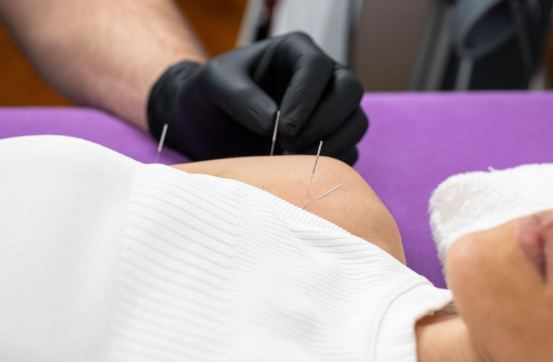
You will be positioned comfortably, and the practitioner will gently insert the thin needle through the skin. You may feel a tiny prick or nothing at all. The needle is then guided with precision toward the identified trigger point.
Eliciting the LTR
To trigger the twitch response, your practitioner may gently move the needle up and down or in a small arc. When this happens, you might feel a quick muscle jump, mild cramp, or dull ache. This brief sensation means the treatment is working and usually fades right away.
Post-Treatment Care
The needles stay in place only for a few seconds to a few minutes per point. After removal, the practitioner may apply light pressure to the area. You’ll be given simple aftercare instructions, like doing gentle stretches, applying heat, and staying hydrated, to help your muscles recover and stay relaxed.
The Advanced Benefits of Dry Needling
This treatment helps your muscles and nerves work together more effectively, improving strength, coordination, and overall movement. Once a trigger point releases, the muscle returns to normal function, allowing your body to move more smoothly and reducing the chance of future strain or injury.
The tiny, controlled punctures from the needle also stimulate your body’s natural healing response. This promotes collagen production and tissue repair, helping to loosen stiff areas, improve flexibility, and restore normal movement in muscles that have been tight for a long time.
Dry needling further helps calm the nervous system. By reducing muscle tension and nerve sensitivity, it allows the body to relax and reset. The result is less pain, less stiffness, and a greater sense of comfort and ease throughout your body.
Our practitioners at
Sycamore Chiropractic and Nutrition combine advanced techniques like dry needling with personalized chiropractic, rehabilitation, and nutrition strategies to help your body heal naturally. To learn if dry needling is the missing component in your recovery,
schedule your comprehensive evaluation with us today.